

CR-P2 6V 1500mAh Primary Lithium Manganese Dioxide LiMnO2 Twin-Cell Battery Pack
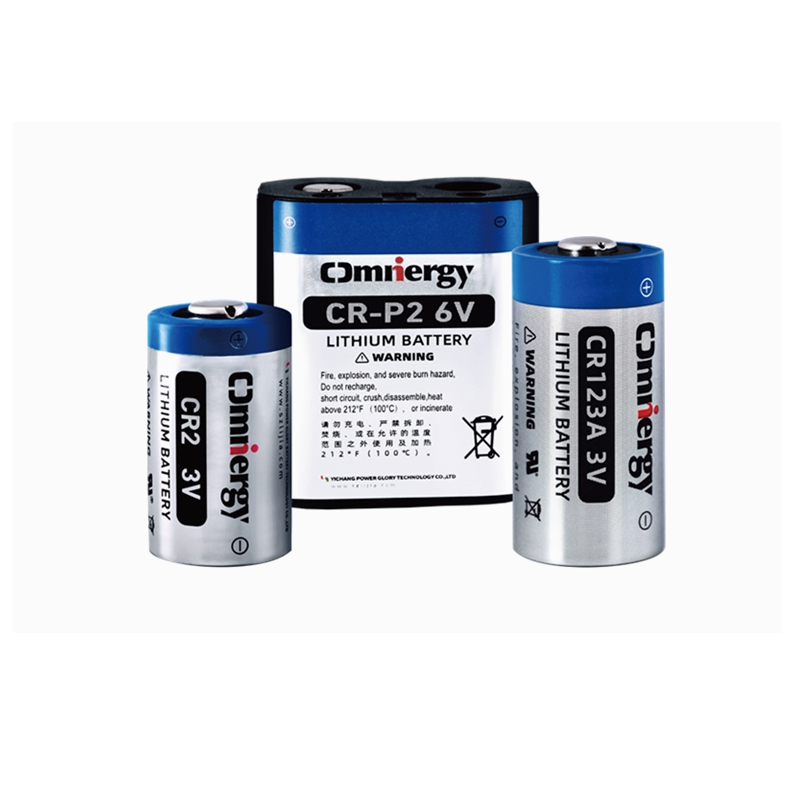
Integrated 6V Industrial Block. 1500mAh Nominal Capacity. Structural Reliability for Severe Field Environments.
When hardware architectures require a rigid 6V supply rail, relying on individual loose batteries introduces systemic risks. Physical shocks can displace cells, contacts can oxidize over time, and field technicians can easily insert batteries backwards. The CR-P2 6V 1500mAh Primary Lithium Manganese Battery Pack removes these vulnerabilities from your design layout.
Housed in an impact-resistant polymer casing measuring 19.5 × 36.0 × 33.4mm e peso 38g, this non-rechargeable dual-cell block provides a dense 1500 mAh energy reserve. It maintains clean voltage tracking under severe mechanical vibrations and extreme temperature variations, ensuring long-term hardware independence.
Technical Specifications of CR-P2 6V 1500mAh Twin-Cell Battery Pack
| Parametro di Ingegneria Industriale | Valore certificato |
| Design del modello | CR-P2 |
| Matrice chimica | Lithium Manganese Dioxide LiMnO2, Primary/Single-Use) |
| Tensione nominale | 6,0 V |
| Capacità nominale | 1500 mAh |
| Dimensioni fisiche | 19.5 mm × 36.0 mm × 33.4 mm |
| Peso netto | 38.0g |
| Tasso annuale di autoscarica | ≤ 2% per year (Stored at standard 20°C) |
| Intervallo di temperatura operativa | -40 °C fino a +70 °C |
Full Series of Primary Lithium Manganese Dioxide Batteries
| Modello | Tensione nominale (V) | Capacità nominale (mAh) | Corrente continua massima (mA) | Corrente di picco massima (mA) | Dimensioni massime (mm) | Temperatura di esercizio (℃) | Peso (g) |
| CR123A | 3 | 1500 | 1500 | 3000 | Φ17,0*34,5 | -40~+70 | 16 |
| CR123A | 3 | 1700 | 1500 | 3000 | Φ17,0*34,5 | -40~+70 | 16 |
| CR2 | 3 | 900 | 1000 | 2000 | Φ15,6*27,0 | -40~+70 | 11 |
| CR2 | 3 | 1000 | 1000 | 2000 | Φ15,6*27,0 | -40~+70 | 11 |
| CR14250 | 3 | 800 | 800 | 1500 | Φ14,5*25,0 | -40~+70 | 9 |
| CR17450 | 3 | 2400 | 1500 | 3000 | Φ17,0*45,0 | -40~+70 | 24 |
| CR14505 | 3 | 1600 | 1500 | 2000 | Φ14,5*50,5 | -40~+70 | 17 |
| CR-1/3N | 3 | 170 | 80 | 160 | Φ11,6*10,8 | -40~+70 | 3 |
| CR-P2 | 6 | 1500 | 1500 | 3000 | Φ19,5*36,0*33,4 | -40~+70 | 38 |
| CR-P2 | 6 | 1700 | 1500 | 3000 | Φ19,5*36,0*33,4 | -40~+70 | 38 |
Vantaggi ingegneristici fondamentali e utilità B2B
1. Unified Series-Connected Block Design
The CR-P2 configures two high-grade cylindrical cells in a solid, pre-welded internal series connection. Encased in a keyed housing that prevents incorrect installation, this design eliminates point-to-point contact resistance and prevents power failure caused by high-vibration environments.
2. High-Pulse Capacity via Spiral-Wound Topology
Engineered for hardware that switches rapidly between micro-amp sleep cycles and intensive wireless transmission modes, the internal cells use a precision spiral-wound layout. This maximizes the chemical reaction surface area, enabling the battery pack to support heavy pulse currents without dropping the terminal voltage below your microprocessor’s cutoff threshold.
3. Decadal Storage Stability (≤2% Self-Discharge)
By pairing a high-purity lithium metal anode with tight hermetic glass-to-metal cell seals, internal chemical degradation is limited to under 2% annually. Your finished products can remain idle in long-term warehouse storage or field standby for up to a decade and still perform instantly upon activation.
4. Extreme Thermal Resilience (-40°C to +70°C)
The cell chemistry utilizes a specialized low-viscosity organic electrolyte. This formula prevents sluggish ionic mobility in deep-freeze conditions (-40 °C) while remaining structurally sound and leak-proof against internal pressure buildup in high-heat zones (+70 °C).
Impieghi mirati nei vari settori industriali
Global hardware developers and component procurement managers integrate our industrial-grade CR-P2 across four primary technical verticals:
Utilities, Smart Cities & Data Protection
Subsurface, Marine Exploration & Safety
Automotive, Fleet Logistics & Telematics
Commercial Security, Medical Tech & Professional Optics
Why Partner With Us for Volume CR-P2 Procurement?
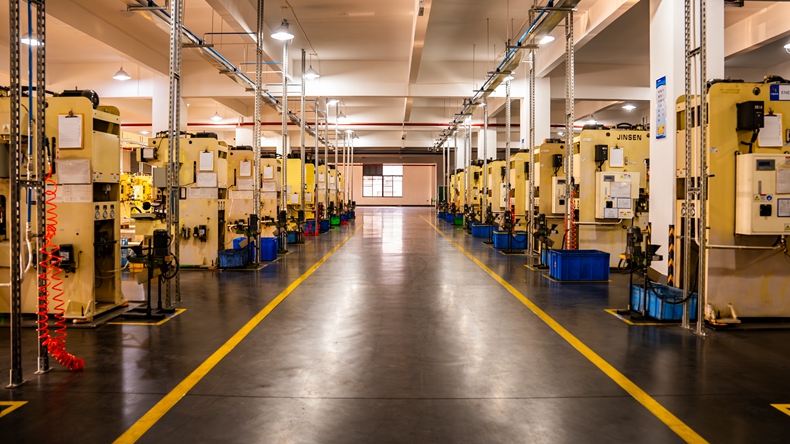
As a dedicated component manufacturer, we match strict industrial production tolerances with predictable global supply chains.
Domande frequenti
Q1: Can a CR-P2 battery pack be recharged?
A: No. The CR-P2 is a batteria primaria (monouso) al litio-diossido di manganese. It cannot be safely recharged. Attempting to force current into this pack will break down the internal hermetic cell seals, leading to electrolyte leakage, internal short circuits, or thermal runaway.
Q2: What is the main structural advantage of using a CR-P2 block over two separate CR123A batteries?
A: While a CR-P2 structurally contains two CR123A cell equivalents wired in series, the outer polymer housing keys the battery compartment to prevent reverse-polarity insertion by field technicians. Additionally, the pre-welded internal series connection avoids common contact resistance issues caused by vibration or terminal oxidation over a 10-year field lifespan.
Q3: How does the ≤2% annual self-discharge rate protect data loggers and memory backup systems?
A: Industrial data loggers and memory backup circuits spend up to 99% of their operational lifecycles in deep sleep mode, drawing micro-amps and waking up for mere milliseconds to log or transmit data. A self-discharge rate of ≤2% ensures that the battery’s energy is preserved for actual device operations over a span of up to 10 years, rather than wasting away internally.