CR2025D 3V 150mAh Low-Temperature Lithium Manganese Dioxide LiMnO2 Battery
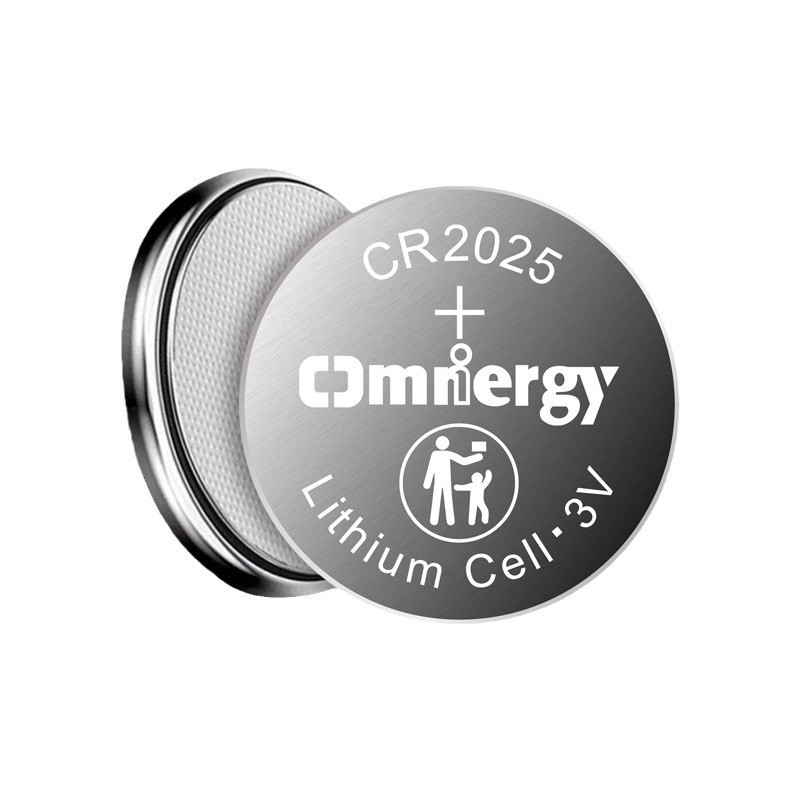
The CR2025D is a high-performance primary lithium coin cell specifically developed for industrial and mission-critical applications where standard batteries fail. Featuring our proprietary “D” Series Low-Temperature Resistance technology, this battery maintains a stable 3V output and a high 150mAh capacity even in the harshest sub-zero environments.
Whether for arctic research, high-altitude aerospace, or cold-chain logistics, the CR2025D is the definitive choice for engineers requiring uncompromising reliability.
Technical Specifications of CR2025D 3V 150mAh
| Feature | Details |
| Model Number | CR2025D (Low-Temperature Resistant Series) |
| Chemical System | Lithium Manganese Dioxide (Li−MnO2) |
| Nominal Voltage | 3.0V |
| Nominal Capacity | 150mAh |
| Operating Temperature | -55°C to +60°C |
| Dimensions | 20.0mm (Diameter) × 2.5mm (Height) |
| Self-Discharge Rate | ≤2% per year (at 20°C) |
| Standard Current | 0.2mA |
“D” Series Low-Temperature Resistance Batteries
| Model | Nominal Voltage(V) | Nominal Capacity(mAh) | Nominal Current (mA) | Maximum Continuous Current( mA) | Maximum Pluse Current(mA) | Max Dimension(mm) | Working Temperature(℃) | Weight(g) |
| CR1632D | 3 | 120 | 0.2 | 3 | 8 | Φ16.0×3.2 | -55~60 | 2 |
| CR2016D | 3 | 80 | 0.1 | 5 | 15 | Φ20.0×1.6 | -55~60 | 2 |
| CR2025D | 3 | 150 | 0.2 | 5 | 15 | Φ20.0×2.5 | -55~60 | 2.6 |
| CR2032D | 3 | 220 | 0.2 | 5 | 15 | Φ20.0×3.2 | -55~60 | 3.2 |
| CR2320D | 3 | 130 | 0.2 | 6 | 20 | Φ23.0×2.0 | -55~60 | 3 |
| CR2325D | 3 | 190 | 0.2 | 6 | 20 | Φ23.0×2.5 | -55~60 | 3.3 |
| CR2330D | 3 | 260 | 0.2 | 6 | 20 | Φ23.0×3.0 | -55~60 | 4 |
| CR2335D | 3 | 300 | 0.2 | 6 | 20 | Φ23.0×3.5 | -55~60 | 4.3 |
| CR2354D | 3 | 520 | 0.4 | 6 | 20 | Φ23.0×5.4 | -55~60 | 6.9 |
| CR2430D | 3 | 270 | 0.2 | 7 | 25 | Φ24.5×3.0 | -55~60 | 4.5 |
| CR2450D | 3 | 600 | 0.4 | 7 | 25 | Φ24.5×5.0 | -55~60 | 6.8 |
| CR2477D | 3 | 1000 | 0.6 | 7 | 25 | Φ24.5×7.7 | -55~60 | 10.5 |
| CR3032D | 3 | 500 | 0.4 | 10 | 30 | Φ30.0×3.2 | -55~60 | 6.8 |
| CR3832D | 3 | 850 | 0.8 | 20 | 75 | Φ38.0×3.2 | -55~60 | 11 |
Key Performance Advantages
1. Specialist Low-Temperature Chemistry (-55°C)
The “D” designation identifies our specialized electrolyte formula. Unlike standard CR2025 cells that lose over 50% efficiency at -20°C, the CR2025D is optimized to provide stable voltage and pulse current down to -55°C. This ensures data transmission and sensor accuracy in deep-freeze conditions.
2. High Energy Density (150mAh)
In a slim 2.5mm profile, the CR2025D packs a robust 150mAh capacity. This high energy density reduces maintenance cycles for remote devices, providing a longer service life for industrial IoT nodes and medical wearables.
3. Superior Leak-Proof Seal
Engineered with an upgraded stainless-steel casing and a specialized cold-resistant gasket, the CR2025D prevents electrolyte evaporation and leakage under fluctuating atmospheric pressures and extreme temperature cycles.
4. 10-Year Shelf Life
With a self-discharge rate of less than 1% per year at room temperature, these batteries are ideal for emergency backup systems and “set-and-forget” infrastructure monitors.
B2B & Industrial Applications
The CR2025D is the preferred energy source for professional sectors including:
B2B Partnership & Customization
As a specialized battery manufacturer, we support your project from R&D to mass production:
Frequently Asked Questions
Q: What is the difference between CR2025 and CR2025D?
A: The “D” series is a technical upgrade designed for low-temperature resistance. While standard CR2025 batteries are typically rated for -20°C, the CR2025D is chemically optimized to operate reliably at temperatures as low as -55°C.
Q: Is the CR2025D 150mAh compatible with standard battery holders?
A: Yes. The physical dimensions (20.0mm*2.5mm) are identical to a standard CR2025, allowing for a seamless “drop-in” upgrade to improve the cold-weather performance of your device.
Q: Can you provide a datasheet and MSDS for the CR2025D?
A: Certainly. As a B2B supplier, we provide full technical documentation, including discharge curves, pulse test data, and UN38.3 reports to support your engineering and compliance reviews.