ML2430 3V 100mAh Rechargeable Lithium Aluminum Alloy Button Cell Battery
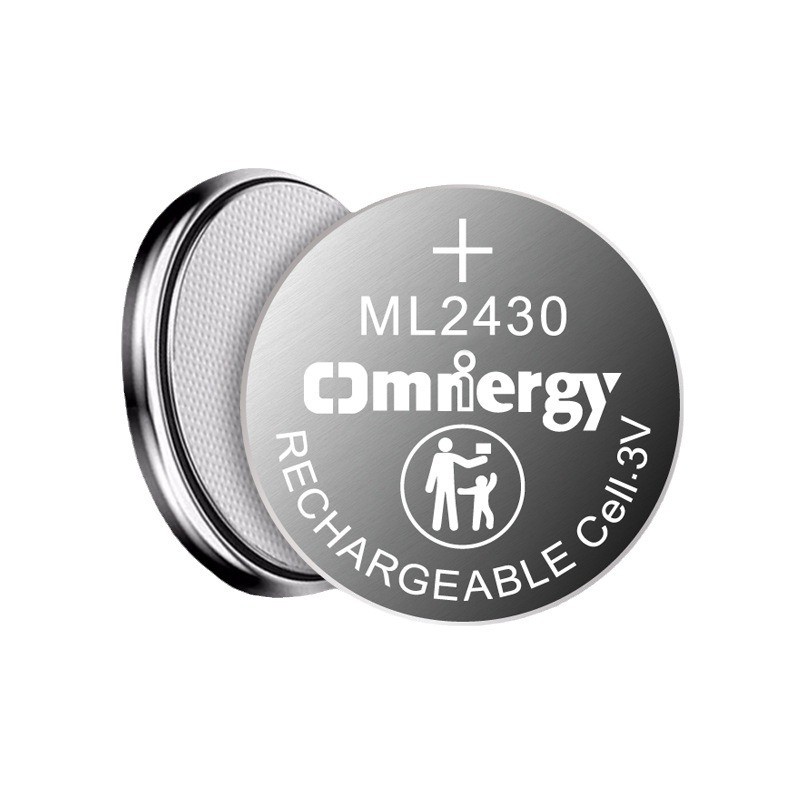
Heavy-Duty Micro Power. 1000-Cycle Endurance. The High-Capacity Sentinel for Enterprise Hardware.
When system down-time translates directly to lost revenue, data corruption, or compromised security, hardware architects look beyond standard micro-cells. The ML2430 3V 100mAh Rechargeable Lithium Aluminum Alloy Battery is engineered for high-drain, long-duration backup applications where typical 15mAh to 30mAh coin cells fail to provide an adequate safety margin.
By leveraging a wider φ24.5 × 3.0mm form factor and weighing 4.2g, this secondary cell packs a massive 100mAh energy reservoir. It provides your critical circuits with an unprecedented operational runway, eliminating the maintenance overhead and environmental waste of disposable primary batteries.
Technical Specifications of ML2430 rechargeable battery
| Engineering Parameter | Certified Value |
| Model Number | ML2430 |
| Chemical Composition | Lithium Aluminum Alloy (Secondary Rechargeable) |
| Nominal Voltage | 3.0V |
| Nominal Capacity | 100mAh |
| Dimensions | Diameter: φ24.5mm × Height: 3.0mm |
| Net Weight | 4.2g |
| Operating Temperature Range | -20°C to +70°C |
| Cycle Life Performance | 1,000 cycles (Standard) / 500 cycles (Deep Discharge Profile) |
| Terminal / Pin Options | Surface Mount SMT Tabs, Through-Hole Pins, Wire-and-Connector Assemblies |
Full ML Series of Rechargeable Lithium Coin Cells
| Model | Nominal Voltage(V) | Nominal Current (mA) | Nominal Capacity (mAh) | Charge-Discharge Cycle Characteristics Number of Cycles 10% DOD / 20% DOD |
Max Dimension (mm) | Working Temperature(℃) | Weight(g) |
| ML1220 | 3 | 0.1 | 18 | 300/120 | φ12.5×2.0 | -20~+70 | 0.8 |
| ML1225 | 3 | 0.1 | 25 | 300/120 | φ12.5×2.5 | -20~+70 | 0.9 |
| ML 2016 | 3 | 0.2 | 30 | 400/180 | φ20.0×1.6 | -20~+70 | 1.8 |
| ML 2020 | 3 | 0.2 | 40 | 400/180 | φ20.0×2.0 | -20~+70 | 2.2 |
| ML 2032 | 3 | 0.2 | 65 | 600/300 | φ20.0×3.2 | -20~+70 | 3.1 |
| ML 2430 | 3 | 0.3 | 100 | 1000/500 | φ24.5×3.0 | -20~+70 | 4.2 |
Core Engineering Advantages & B2B Value
1. The 100mAh Capacity Benchmark
The standout feature of the ML2430 is its heavy-duty 100mAh capacity. For hardware running multi-chip arrays, complex real-time clocks (RTC), or devices requiring frequent background data logging during main power outages, this cell provides up to 5 times the standby life of standard 20mm coin cells.
2. Premium 1000/500 Cycle Lifetime
Built with a highly stable lithium aluminum alloy crystal lattice, the ML2430 withstands 1,000 standard charge/discharge cycles (and up to 500 cycles under deep discharge test protocols). Because real-world backup environments typically utilize shallow micro-cycling, this cell easily matches or outlasts the 10-to-15-year service life of industrial computing infrastructure.
3. Industrial Thermal Tolerance (-20°C to +70°C)
The battery’s internal chemistry is formulated to resist passivation in freezing outdoor field equipment (-20°C) while remaining completely stable against internal pressure increases or rapid self-discharge in high-temperature operating environments (+70°C).
4. Precision Voltage Regulation
Delivers a sustained, flat 3.0V discharge curve. This consistent voltage keeps sensitive CMOS registers, cryptographic modules, and system clocks completely stable, preventing voltage drops that trigger accidental firmware wipes.
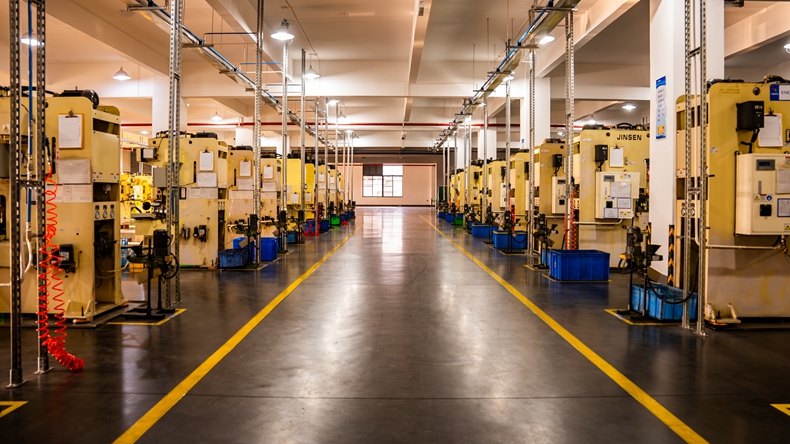
Targeted Industry Deployments
Global hardware engineers and procurement managers specify the ML2430 for heavy-duty data preservation:
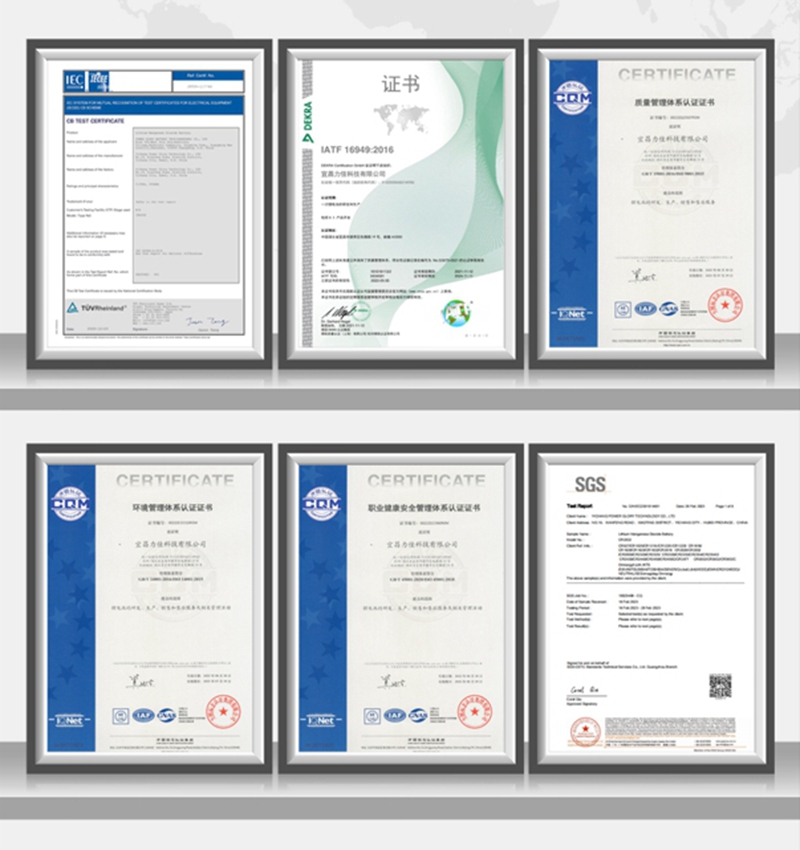
Factory-Direct B2B Supply & Customization Services
As an established global component manufacturer, we provide the supply chain scalability required by automated, high-precision assembly lines.
Frequently Asked Questions
Q1: Why should I choose an ML2430 over an ML2032 battery?
A: The ML2430 features a larger diameter (φ24.5mm vs φ20.0mm), which allows it to deliver a 100mAh capacity—nearly double the 65mAh capacity of the ML2032. If your device requires extended backup runtimes, operates in areas with long power-outage windows, or drives a slightly higher standby current, the ML2430 is the superior engineering choice.
Q2: Can the ML2430 be used as a direct replacement for a disposable CR2430?
A: No, not without verifying your circuit design. While both cells share identical physical dimensions, the ML2430 is a rechargeable (secondary) cell, while the CR2430 is a disposable (primary) lithium battery. The host board must be equipped with a managed charging circuit to safely replenish the ML2430 over time.
Q3: How does the 1,000-cycle rating translate to real-world deployment?
A: In typical RTC and CMOS backup circuits, the battery remains fully charged by the main power line and only experiences shallow discharges during temporary outages. Under these micro-cycling conditions, the ML2430 easily achieves its maximum lifespan, running maintenance-free for over a decade without needing replacement.